
Six-Phase Stator vs Three-Phase Stator: Ripple Reduction on J1939 Heavy-Duty Platforms
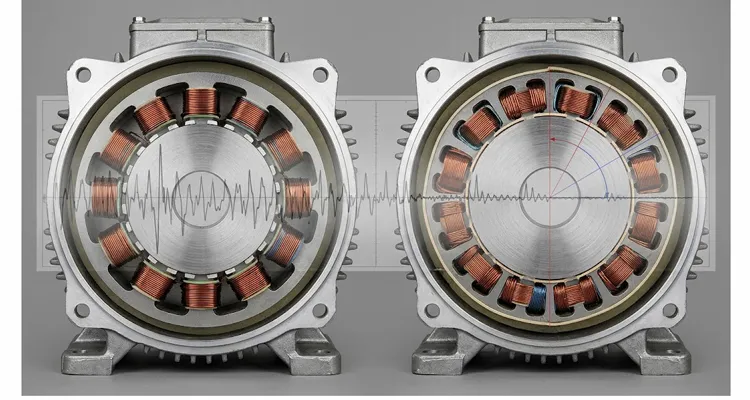
A 48 V auxiliary cooling fan motor on a Class 8 tractor started throwing J1939 error frames at 2,100 engine rpm — only under load, only when ambient temperature crossed about thirty-eight degrees Celsius, and never on the test bench at the Tier 1 supplier. The fan itself was not failing. The fan controller was […]
What OEM Alternator Specifications Must Include for J1939 Ripple Coupling
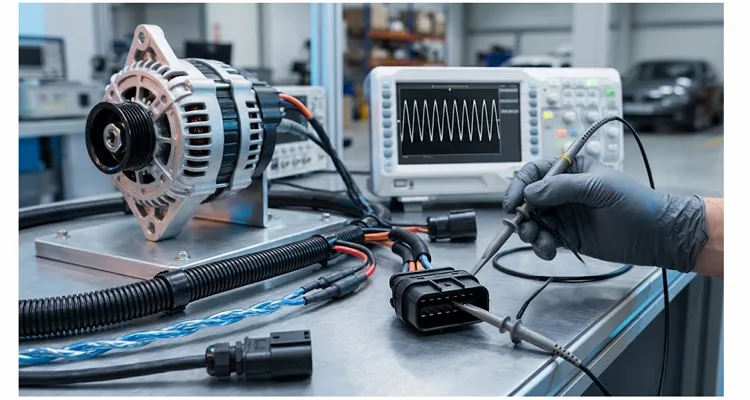
Short answer: An OEM alternator specification for J1939 ripple coupling should define a frequency-resolved ripple envelope, the battery impedance and harness length used for validation, a coupled ripple limit at the ECM supply pin, the J1939-11 harness assumptions, and regulator transient behavior during load steps and bus-commanded voltage changes. When I audit an OEM alternator […]
Why J1939 Common-Mode Noise Follows Alternator Ripple Frequency, Not Engine Load
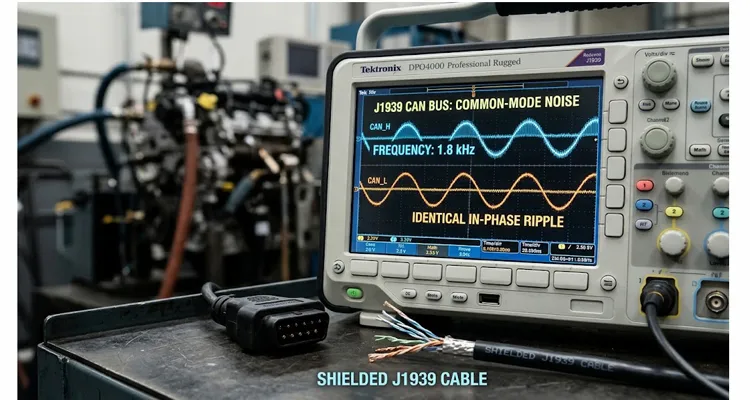
A few winters ago, a test-cell engineer at a powertrain integrator sent me a capture he could not explain. His J1939 bus was dropping frames on a stationary engine run-in stand—not under load, not during acceleration, but at a specific RPM band that appeared whenever the engine was dragged by the dyno in motoring mode. […]
The Twenty-Three Cent Resistor That Caused Eleven Thousand Dollars in Fleet Downtime: A J1939 Case Study
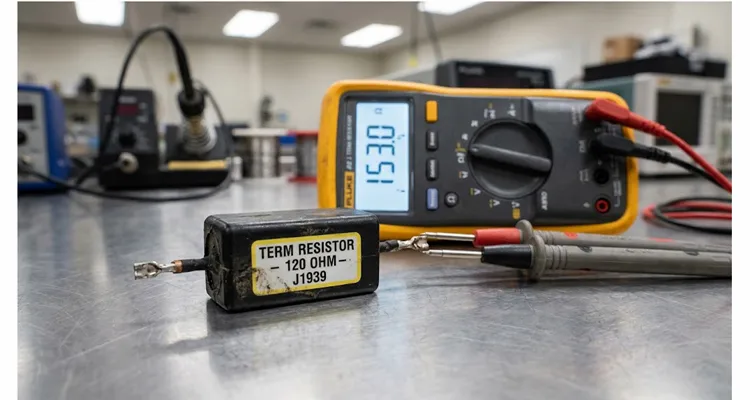
The Call That Should Have Taken Forty-Five Minutes The service manager’s voice on the other end of the line carried that particular tone — the one that says we have already spent money and we still do not have answers. A 2021 Kenworth T680 had been sitting in their shop for four days. The driver […]
Alternator Ripple on J1939: Why SPN 3644 Phantom Derate Appears Only at 1,400 RPM
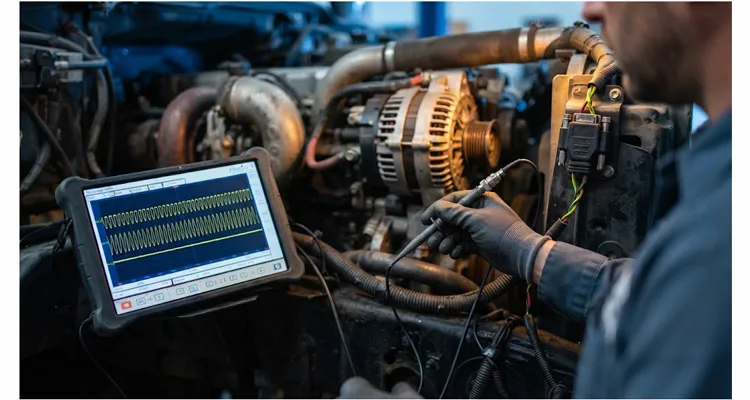
At 1,398 RPM, SPN 3644 read 0%. At 1,402 RPM, it read 42%. At 1,455 RPM, it returned to 0%. The vehicle was a 2021 class-8 tractor with a 12.4 L diesel, a 28V 150A brushless alternator, a 2.5:1 pulley, and a 4.2 m charge cable that ran parallel to the J1939 backbone for 1.1 […]
Forestry CAN Harness Failure: Why Vibration and Chemical Exposure Demand More Than IP67
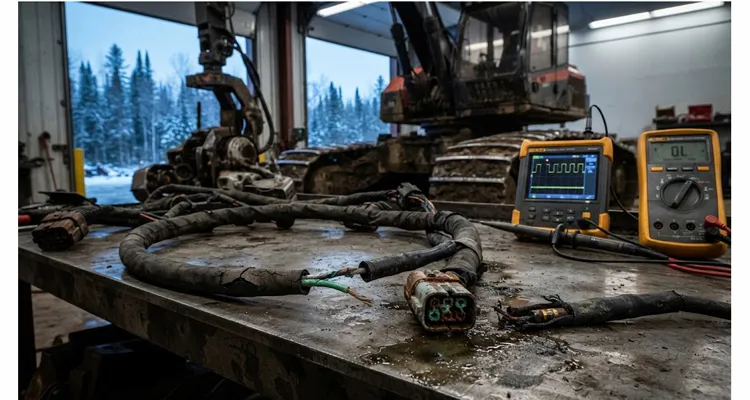
Quick answer: IP67 is a static immersion rating. It does not test vibration fatigue, thermal cycling, hydraulic oil, DEF, or high-pressure washdown. Forestry CAN harnesses fail because the conductor, contact, or seal degrades under dynamic stress before water ever enters the connector. A forestry-grade harness needs ISO 16750-3 vibration testing, ISO 16750-5 chemical testing, and […]