
The Twenty-Three Cent Resistor That Caused Eleven Thousand Dollars in Fleet Downtime: A J1939 Case Study
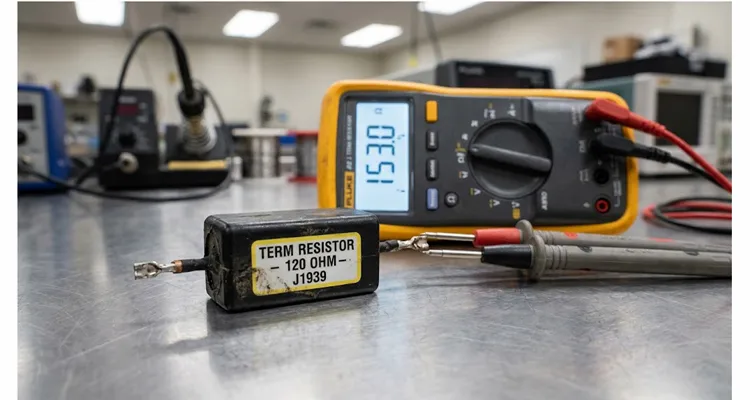
The Call That Should Have Taken Forty-Five Minutes The service manager’s voice on the other end of the line carried that particular tone — the one that says we have already spent money and we still do not have answers. A 2021 Kenworth T680 had been sitting in their shop for four days. The driver […]
Alternator Ripple on J1939: Why SPN 3644 Phantom Derate Appears Only at 1,400 RPM
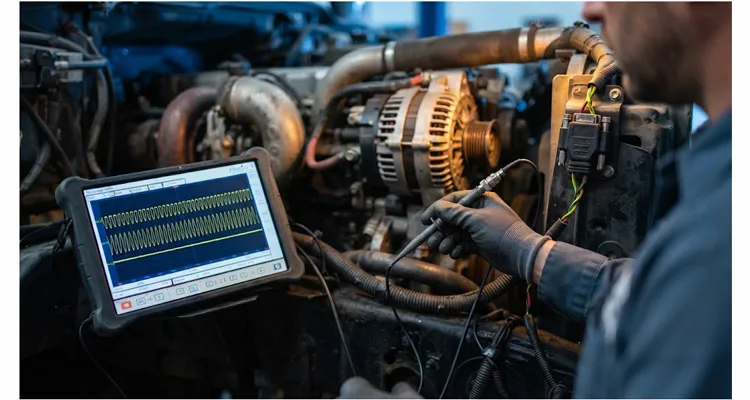
At 1,398 RPM, SPN 3644 read 0%. At 1,402 RPM, it read 42%. At 1,455 RPM, it returned to 0%. The vehicle was a 2021 class-8 tractor with a 12.4 L diesel, a 28V 150A brushless alternator, a 2.5:1 pulley, and a 4.2 m charge cable that ran parallel to the J1939 backbone for 1.1 […]
Forestry CAN Harness Failure: Why Vibration and Chemical Exposure Demand More Than IP67
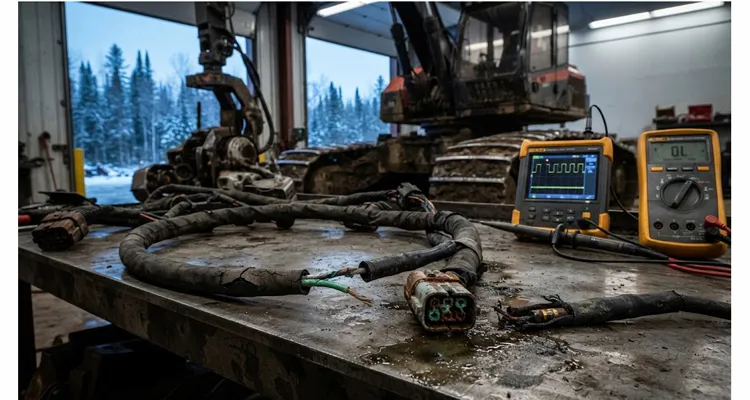
Quick answer: IP67 is a static immersion rating. It does not test vibration fatigue, thermal cycling, hydraulic oil, DEF, or high-pressure washdown. Forestry CAN harnesses fail because the conductor, contact, or seal degrades under dynamic stress before water ever enters the connector. A forestry-grade harness needs ISO 16750-3 vibration testing, ISO 16750-5 chemical testing, and […]
How to Audit a Custom OBD Cable Supplier: 7 Questions Your Current Vendor Can’t Answer
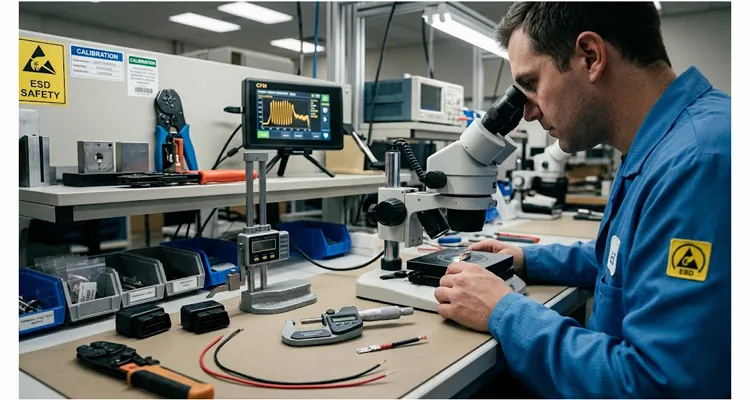
A bench engineer at a Tier 1 diagnostics company once sent me a return: a J1962 extension cable that passed continuity, passed Hi-Pot, and passed visual inspection. The customer’s complaint was intermittent CAN dropouts above 60°C. We cut the overmold open and found the problem in about ninety seconds. The crimp barrel on pin 6 […]
Salt Spray Testing for OBD Harnesses: Why 48 Hours Is Not Enough for Coastal Fleet Applications
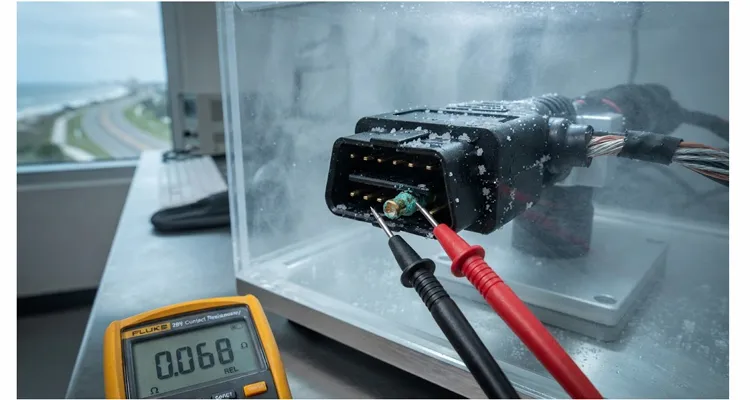
Short answer from our lab: 48-hour salt spray testing is a process control check, not a coastal service-life prediction. For coastal fleet OBD harnesses, specify at least 240 hours neutral salt spray or 15–20 cycles of IEC 60068-2-52 Test Kb, plus post-test contact resistance limits and material traceability. According to the Wikipedia entry on salt […]
What PPAP Level 3 Documentation Actually Looks Like for Custom OBD Cable Assemblies
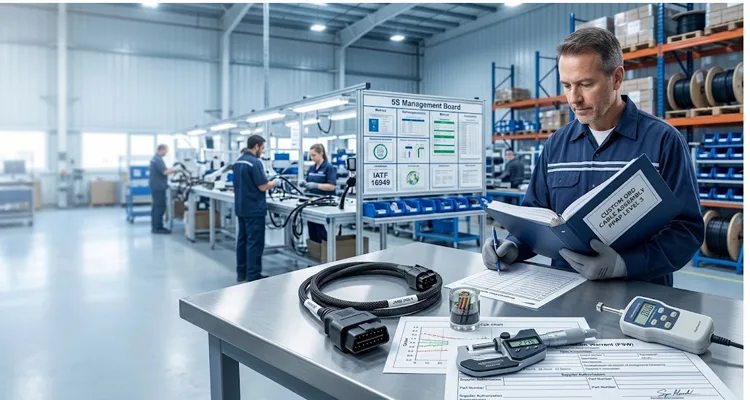
Quick Answer A PPAP Level 3 documentation package for a custom OBD cable assembly normally contains a ballooned drawing, dimensional results for every populated cavity, a process flow diagram, PFMEA, control plan, MSA, material certificates, initial process studies, qualified lab reports, and a signed PSW. The OBD-specific proof that matters most is crimp height Cpk, […]