

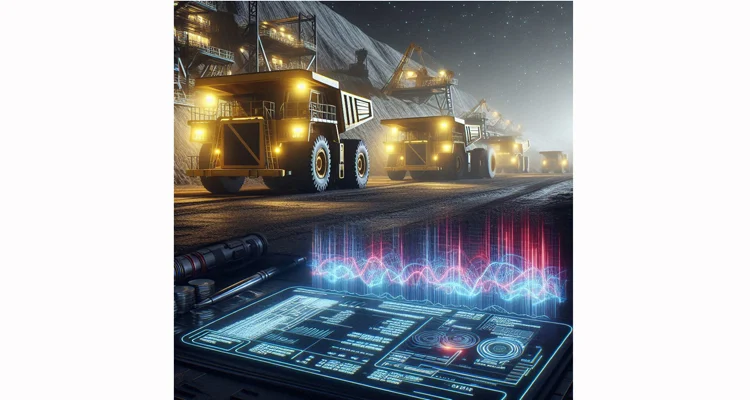
You’re finalizing the Bill of Materials. The line item for the J1939 backbone cable shows a choice: the standard version, and the shielded variant with a $1.50 per meter premium. Over a 3,000-meter production run, that’s a $4,500 saving on paper. The procurement team highlights it as a win. I’ve sat in that design review. Six months later, I was also standing in a mining pit at 2 AM, a superintendent next to me, as three autonomous haul trucks flashed intermittent “ghost” communication faults, their entire operational cycle halted. The diagnostic labor and downtime costs alone tripled that initial “savings” before a single cable was replaced.
This decision between a shielded (STP/S-UTP) or unshielded (UTP) J1939 cable is never just a component selection. It’s a forensic audit of operational risk, deferred until your machine faces its real-world electromagnetic environment. Let’s conduct that audit proactively, with the cost ledger open, before your design is locked.
The Real Cost Ledger: Accounting for EMI’s “Invisible Tax”
The standard framing pitches this as “signal integrity versus unit cost.” That’s a dangerous oversimplification. The true engineering decision is between a known, upfront premium and a variable, potentially catastrophic future liability. This embodies the core argument of investing in a reliability premium: a calculated spend today to insure against tomorrow’s failure costs. Let’s move beyond the invoice and quantify where expenses truly accumulate.
| Cost Category | Unshielded Twisted Pair (UTP) | Shielded Twisted Pair (STP) | The Engineer’s Post-Mortem |
| Direct Material & Assembly | |||
| Cable Raw Cost | Lower | Higher (+20-60%) | Delta depends on shield architecture: foil, braid, or a foil-braid combination. |
| Connector & Termination | Lower | Significantly Higher & Non-Negotiable | This is the make-or-break point. True shielding demands a connector with a conductive, zinc-nickel plated shell and an internal funnel-shaped crimp die specifically for the shield braid. A drain wire merely soldered to a PCB tag is a guaranteed point of failure at 500 kHz. We govern this as a controlled special characteristic in our IATF 16949 pre-production checkup, with metallurgical cross-section samples archived for every manufacturing batch. |
| Design & Validation | |||
| EMC Test Risk | Very High | Managed/Low | Opting for UTP is a bet that your cabinet layout is flawless. The risk of failing Radiated Emissions (RE) or Radiated Immunity (RS) pre-compliance tests is high, triggering costly, panic-driven fixes—last-minute ferrite clamps, harness re-routing, or even PCB re-spins. |
| Lifetime & Field Costs | |||
| Predicted Field Failure Rate | Scenario-Dependent (Potentially High) | Low (When Properly Executed) | In electromagnetically noisy environments, UTP is a direct path to intermittent errors—the “ghost in the machine” faults that consume dozens of diagnostic hours, closely mirroring the common OBD-II failure points we’ve documented from the field. |
| Diagnostic & Warranty Cost | Very High | Low | The calculus includes field technician dispatch, critical machine downtime, and complete harness replacement. This can easily exceed 100x the original cable price difference.For a systematic approach to locate these elusive “ghost” faults, refer to our guide on diagnosing phantom CAN bus faults with Time Domain Reflectometry (TDR). |
| Brand & Reputation Cost | High | Low | When a fleet manager loses confidence in the fundamental data integrity of your equipment, the business cost is long-term and pervasive. |
| Total Cost of Ownership | Unpredictable, potentially catastrophic. | Higher upfront, predictable, and insured. | UTP is akin to a variable-rate loan with hidden penalty clauses. STP is a fixed-premium insurance policy for your critical data link. |
Five Non-Negotiable Scenes Where UTP is a High-Stakes Gamble
Based on tear-down analyses of returned assemblies, selecting an unshielded J1939 cable in these operational environments guarantees that subsequent failure costs will completely overshadow any initial component savings.
1. Inside the Beast: High-Density Power Electronics
Your machine is the primary noise source. Hybrid or electric drivetrains, with their IGBT inverters switching at high dv/dt, are prolific broadband EMI generators. Routing an unshielded CAN bus parallel to these power cables is an invitation for induced noise, a critical consideration we detail for modern agricultural machinery solutions.
2. The “Dirty” Shared Power Supply
When your J1939 nodes draw from the same noisy power rail as inductive loads (hydraulic pumps, solenoids), that electrical noise couples directly onto the data lines. A continuous shield acts as the final defensive barrier when power filtration isn’t perfect.
3. External RF Battlegrounds
Think ports with massive, radio-controlled cranes; manufacturing bays with arc welders; sites near high-power transmitters. You cannot control the ambient RF environment, only fortify your system against it.
4. Long-Haul, High-Speed Data Runs
As cable length increases, its efficiency as a resonant antenna for both receiving and emitting interference rises. Field Data Insight: We’ve logged a measurable jump in recoverable error frames on unshielded runs exceeding 12 meters in diesel-electric locomotives. The real threshold isn’t in the SAE standard; it’s dictated by your platform’s specific common-mode noise floor.
5. Safety-Adjacent or Control-Critical Links
While J1939 is primarily for diagnostics, if its data stream indirectly informs control logic or operator decisions, any corruption is unacceptable. Here, the shield transitions from a performance enhancer to a component of functional redundancy.
The Shield’s Critical Vulnerability: It’s a System, Not a Component
Conceptualize a shield not as a barrier, but as a continuous, low-impedance diversion highway for electromagnetic noise. The aluminum foil or copper braid is merely the on-ramp. If this highway is severed—by a corroded braid (a frequent failure in ag-machinery exposed to ammonium nitrate), a shield drain wire crimped onto its own insulation instead of the conductor, or a connector shell insulated by anodization or paint—the entire system collapses. It then morphs into a half-wave antenna, expertly tuned to amplify the very interference it was meant to block.
This is why we prioritize transfer impedance (Zt) measurements over a simple “has shield” checkbox. A robust Zt curve, tracked against our internal quality inspection standards, provides empirical evidence that the shield functions at the problematic frequencies. As defined by the SAE J1939 standards and the science of Electromagnetic Compatibility (EMC), the shield intercepts the noise coupling “path.” An unterminated or broken shield represents a path of least resistance to failure.
Choosing Between Shielded vs Unshielded J1939 Cable: A Pragmatic Framework
Eliminate the guesswork. Execute this sequence.
Step 1: Map Your Electromagnetic Terrain
Create a simple block diagram of your machine. Identify all high-current paths (>50A), motor drives, DC-DC converters, and antennas. Physically trace the proposed J1939 cable route. If it runs within 200mm of a major noise source for more than one meter, flag it as a high-risk zone.
Step 2: Define the Consequence of Failure
Is this link for a non-critical, optional display? Or is it for implement control, core telematics, or data logging? The operational impact of a fault directly correlates to the required shielding robustness.
Step 3: Prototype with Empirical Intent
If your risk assessment is ambiguous, build two prototype harnesses. Test both under simulated worst-case operation (e.g., all hydraulic pumps energized, a simulated welding load nearby). Monitor the J1939 bus for error frames and latency. Hard data invalidates all assumptions.
Step 4: Vet the Supply Chain with Surgical Precision
This is the most critical step. Employ a structured J1939 supplier audit framework. Demand to see: *”Your documented work instruction for shield termination. Your method for in-process shield continuity testing. Can you provide a Transfer Impedance (Zt) graph per MIL-DTL-17 or EN 50289-1-6 for this cable construction?”* Their response is a direct indicator of their capability
Five Costly Engineering Missteps We’ve Witnessed (And Decoded)
1. Common Mistake #1: Improper Termination of Shielded J1939 Cable
Terminating the shield with a long, loose drain wire soldered to a PCB ground pad is an act of hope, not engineering. At the high-frequency harmonics of J1939, the inductance of this pigtail renders it ineffective; noise simply bypasses it. The shield requires a 360-degree, circumferential, metal-to-metal bond to the connector backshell.
2. “We’ll Add Shielding Later if We Fail EMC.”
This is the most expensive possible retrofit path. Transitioning from UTP to STP after design freeze often mandates new connector types, different gland plates, revised CAD drawings, and updated assembly instructions—costs that utterly eclipse the original cable savings.
3. Treating All Shield Constructions as Equal
Aluminum foil (100% coverage) offers superior high-frequency attenuation but is mechanically fragile. Copper braid (typically 70-95% coverage) provides superior flexibility and durability. In a high-vibration environment like a combine harvester, the correct choice is often a hybrid foil-braid combination.
4. Confusing “Twisted” with “Shielded”
Twisting the pair mitigates low-frequency, magnetic field interference through field cancellation. Shielding mitigates high-frequency, electric field interference through reflection and absorption. They are complementary, not redundant. J1939 mandates twisting; shielding is the performance-additive layer.
5. Focusing Solely on the Cable
The cable is just one segment of the signal chain. The connector shell’s conductivity, the quality of the ground connection on the ECU PCB, and the overall system bonding strategy are equally vital. You need a supplier who comprehends the entire signal integrity system.
Validation: Substituting Promises with Quantifiable Evidence
Move beyond supplier assurances. Demand objective, measurable proof.
Method 1: Pre-Compliance EMC Testing
Submit a fully assembled, representative harness to an accredited EMC lab. A Radiated Immunity (RI) test, where the assembly is subjected to a defined RF field (e.g., 20V/m from 80MHz to 1GHz) while J1939 error rates are monitored, provides definitive, binary proof of robustness.
Method 2: Shield Effectiveness Measurement
Require a Transfer Impedance (Zt) graph from your cable supplier. Specify that you need it referenced to a standard like MIL-DTL-17 or EN 50289-1-6, with data points at 100 MHz. Hesitation is a clear indicator they are not performing this fundamental characterization. We maintain these graphs for every qualified cable build.
Method 3: Environmental Stress Sequencing
Subject the cable assembly to a tailored regimen of vibration, thermal cycling, and chemical exposure (simulating, for instance, fertilizer spray or diesel fluid), then re-measure shield continuity and impedance. This validates survival in the real world. Our 4-step quality inspection protocol is designed to intercept these failure modes at the source.
From Threat Model to Terminated Shield: Our Defined Deliverable
What we provide is not a commodity cable. It is a qualified, fully characterized link within your vehicle’s nervous system. This process originates with a Shielding Strategy Document for your specific application—a concise, actionable report that maps your identified noise sources and platform constraints to our recommended shield architecture (e.g., “Application of 85% coverage tinned copper braid over a bonded aluminum foil layer for Hybrid Wheel Loader Project X, based on adjacent 800V traction inverter noise profiles“).
Execution is grounded in factory disciplines often overlooked: 5S methodology in the crimping cell to prevent stray shield filaments from causing shorts; climate-controlled raw material storage to prevent degradation of the foil’s adhesive layer; and a final inspection that includes a micro-ohm meter check of the completed shield path from foil to connector shell. This operational rigor is the tangible manifestation of our IATF 16949 and ISO 14001 certifications. We don’t just sell you a part; we co-sign the performance liability of your data link.
FAQ: Direct Answers from the Engineering Bench
Q1: Should the cable shield be grounded at one end or both ends?
A: For the vast majority of heavy vehicle applications, where controlling both radiated emissions and ensuring immunity are required, grounding at both ends is the standard and recommended practice. The critical factor is ensuring each ground connection is to a clean, low-impedance point on the vehicle chassis or ECU ground plane to avoid creating ground loops.
Q2: Shielded cable is less flexible. How does this impact installation and long-term vibration survival?
A: This is a fundamental mechanical trade-off. The solution lies in integrated design: specifying a finer strand count for the conductors, selecting a braid pattern optimized for flex-life, and defining enforceable minimum bend radii during the initial harness design review to prevent installer over-stress.
Q3: Is it acceptable to use shielded cable only for the externally exposed section and UTP inside the protected cabin?
A: Yes, this “zone defense” approach can be valid. However, the transition design is critical. The shield must be electrically bonded to the vehicle chassis ground at the bulkhead penetration point. If this bond is omitted or poorly executed, you effectively create an antenna at the junction, negating the benefit.
Q4: Are there any cost-effective middle-ground options between full shielding and none
A: Partial solutions exist, such as overall harness shielding with a braided sleeve or using a lower-coverage braid. It is crucial to understand that all such options represent a specific performance compromise that must be validated against your actual, measured noise profile—not assumed to be “good enough.”
Q5: How can we perform a receiving inspection to verify shield quality on incoming batches?
A: Visual inspection is largely futile for critical performance. You must rely on your supplier’s process control. Require them to provide batch-specific data packs that may include crimp cross-section analysis, Hi-Pot test results, and, for critical applications, the referenced Zt data.
Q6: We installed a shielded J1939 cable but still experience EMI issues. Why?
A: In over 90% of such cases, the fault lies not in the cable body, but at the termination points. The failure modes are a broken drain wire due to strain, a corroded or non-conductive connector shell, or a high-impedance ground connection on the receiving PCB. The cable assembly is only as robust as its weakest link, a principle explored in our analysis of a specific 3cm fracture zone failure.
Q7: Our project has an extremely aggressive cost target. What are the absolute minimum steps to improve EMI performance if STP is excluded?
A: If a shielded construction is categorically excluded, your last-resort mitigations are: 1) Strictly maintain the cable’s twist rate up to the connector, never untwisting more than ½ inch (13mm). 2) Increase physical separation from any noise source to a minimum of 300mm. 3) Specify a clip-on ferrite core at each connector. Acknowledge that these are risk mitigants, not solutions.
Q8: What is the typical lead time for engineering samples of a custom shielded J1939 cable assembly?
A: For a fully defined specification using existing qualified components, expect 2-3 weeks for first article samples. If the design requires new connector validation or a novel shield type qualification, lead time extends to 4-6 weeks. Engaging our engineering team during your preliminary design phase is the most effective way to streamline this timeline.
Engineering a robust J1939 data link goes beyond theoretical analysis. For applications requiring reliable breakout connections, our J1939 9-Pin Pigtail Breakout Cable incorporates the shielding and termination principles discussed here, providing a pre-validated solution to mitigate EMI risks in critical setups.
The Next Step: Partner on Your Specific Scenario
The choice between a shielded or unshielded J1939 data link is a core engineering decision with decade-long implications for Total Cost of Ownership. It warrants a deeper analysis than a simple spreadsheet calculation.
If you are evaluating this trade-off for a current or upcoming project, let’s initiate a technical dialogue. Share your machine layout, identified noise sources, and performance constraints.
- Send us a direct message via WhatsApp for an immediate, conversational exchange of your specific concerns.
- Alternatively, use our dedicated Contact Page to upload your requirements document or a schematic snippet. We will assign an application engineer to perform a preliminary review and schedule a technical call to discuss a cost-benefit analysis structured around your unique design.
We exist to translate deep manufacturing and failure analysis expertise into engineering certainty, transforming a routine component decision into a demonstrable reliability advantage for your product.
